
ORGANIC WINE – ALL NATURAL?
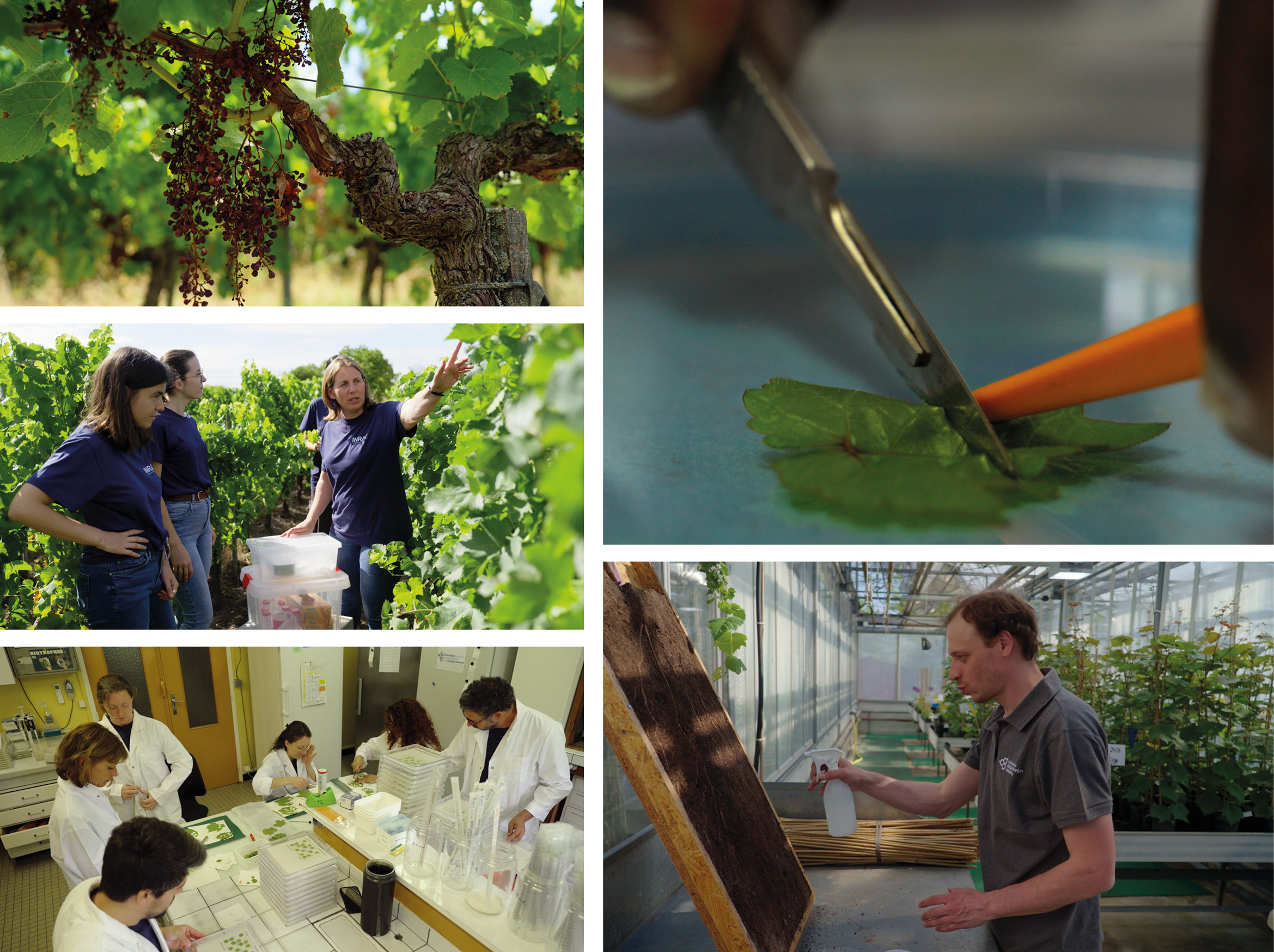
Researchers are racing to find a solution for organic winegrowing.Copper – the only permitted treatment against fungal disease – faces an EU ban. Does this spell the end of organic winegrowing?
They search in the soil, on the leaves and even in the genome. Researchers are racing to save organic viticulture, because organic winegrowers face a serious problem: a destructive fungus capable of wiping out entire harvests. Only one plant protection product is permitted in organic winegrowing to combat this fungal disease: copper. But the heavy metal is controversial, as it is harmful to soil organisms and the EU is even considering an outright ban. Does this spell the end of organic viticulture? Or will science find an ecological solution to downy mildew? Wine producer Simone Adams works biodynamically, strengthening her vines’ natural defences through a range of natural methods. She has managed to reduce her copper use, but cannot eliminate it completely without causing crop losses that would make her vineyard economically unviable. Researchers in Germany and France are racing to find alternatives to copper. One approach focuses on selectively influencing microbial communities on vines and in the soil in order to boost the plants’ natural defences. They are also investigating a mysterious underground network: mycorrhizal fungi that form a symbiosis with the roots of the vines and activate their immune responses. And through marker-assisted selection, researchers are developing fungus-resistant grape varieties that could make vines fundamentally immune to downy mildew.