SCIENCE

  • THE FLY AGARIC – BETWEEN MYTH AND SCIENCE

    With its recognisable bright red cap with white spots, the fly agaric (Amanita muscaria) seems like the archetypal fairy tale toadstool. But it is also toxic to humans and can lead to hallucinations and psychotic reactions if ingested. A source of fascination and fear, how dangerous is this mushroom? And could it be beneficial to humankind?

  • CHRONOBIOLOGY – THE RHYTHM OF LIFE

    What happens if our bodies have long been sounding the alarm – just because we’re awake, eating or sleeping at the wrong time? Chronobiology is completely rethinking health, the mind and medicine: from therapy using light to the question of why a disrupted internal clock can make us ill.

  • THE QUANTUM REVOLUTION

    A hundred years ago, in October 1927, Einstein, Heisenberg, Schrödinger, Curie, Bohr and many other leading scientists gathered in Brussels for the fifth Solvay Conference, a kind of summit for physicists and chemists. They discussed a theory that would go on to change the world: quantum mechanics.

  • MIGRAINE – MORE THAN A HEADACHE

    Migraine is more than just a headache – yet it remains one of the most neglected conditions of our time. For those affected, it can affect every aspect of their life. In Copenhagen, researchers ask what happens in the brain during an attack, and what really brings relief. The film explores why migraine remains so stigmatised and how new therapies could change lives.

  • SUPERPOSITION – THE RACE FOR QUANTUM COMPUTING

    In the shadow of AI, a potentially even more disruptive technological era is emerging. Quantum computing is so revolutionary that every major global power is racing to master it. We follow four international scientists at Forschungszentrum Jülich – Europe’s epicentre of quantum research.

  • DEEP SEA – THE UNKNOWN ECOSYSTEM

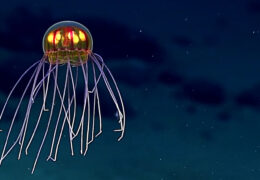
    Although the world’s oceans cover around 70% of the Earth’s surface, their depths remain largely unexplored. Fascination Deep Sea reveals the most breathtaking landscapes and the most extraordinary creatures the oceans have to offer. We uncover sunken ships and underwater mineral wealth, and learn why the ocean ecosystem regulates the climate of our entire planet.

  • ORGANIC WINE – ALL NATURAL?

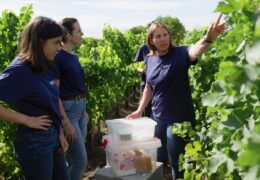
    Organic viticulture is facing a major challenge. The only permitted treatment against harmful fungal diseases – copper – is now facing an EU ban due to its impact on soil organisms. Does this spell the end of organic winegrowing? Or will science find an ecological alternative to combat downy mildew?

  • THE WEIGHT OF THE WORLD

    Facts over feelings – science is supposed to be objective. But a new generation of scientists watches as climate change throws their research off course. Instead of discovering nature’s wonders, they now chronicle its collapse. It’s time to leave the lab and take a stand – because they carry the weight of the world on their shoulders.

  • WATCHING PEOPLE WATCHING BIRDS

    Politically urgent, serious yet humorous, this film follows people who are passionate about birdwatching. Among them is world-renowned author Jonathan Franzen, a bakery saleswoman and a team of young ornithologists. Through their eyes and ears, we enter the world of birds – a world that becomes a striking metaphor for the state of our planet.

  • MEMORY WARS

    American psychologist Elisabeth Loftus is world-renowned for her research on the unreliability of human memory. Based on a series of high-profile US court cases in which she regularly serves as an expert for the defence, Memory Wars highlights the tension between truth and justice. In the age of “fake news”, her scientific expertise is more in demand than ever – and no less controversial.

  • POWER FROM THE SEA – UTOPIA OR REALITY?

    Whether through tidal power plants, ocean currents or wave energy – the sea represents an almost limitless source of energy. Yet despite decades of research and promising pilot projects, marine energy technologies have yet to achieve a significant breakthrough on a global scale. Why does marine energy fall short of its potential?

  • LITHIUM IN EUROPE – CAN A SUSTAINABLE CYCLE BE ACHIEVED?

    Lithium is currently mined primarily in South America and Australia – a resource-intensive, environmentally harmful process. Could Europe produce it more sustainably? And how could recycling electric vehicle batteries bring lithium into a circular system? The film explores the technological challenges of creating a closed-loop lithium cycle.