ORPHAN BEARS IN THE LAND OF THE TIGERS
Two scientists are raising young orphan bears in the Siberian wilderness. Their mothers were killed by hunters. Will the scientists bring the cubs safely through their first summer?
A glacier is not just a giant block of ice. Glaciologist Coen Hofstede and his international team set off on an extraordinary scientific adventure to the Russel Glacier. Their mission is to conduct studies on the texture of the ice. With the results of this research the scientists hope to find out more about glacial change and thus draw further conclusions about global climate. Join us on a journey to the beautiful tundra of Greenland.
More and more babies are born too early: 15 million premature births worldwide. Not that long ago, few people would have believed that such prematurely born babies could survive. Following the cases of four extremely premature babies from Germany, France, Great Britain and Japan, this scientific documentary takes a look at international treatment methods in neonatology.
Sea levels are rising and storms are becoming increasingly powerful. Climate change has serious consequences. Is our architecture still fulfilling its actual purpose – namely to protect us from the cold and heat, from rain and storms? We follow three visionary architects in their search for appropriate, future-proof solutions.
Imagine driving to the opera, getting out of your car and leaving it to find a parking spot on its own while you go in to take your seat? Sounds convenient, doesn’t it? The global race to build the first autonomous car has already begun. In fact, vehicle manufacturers have been studying the concept of self-driving cars for over 60 years.
With opulent imagery, this film documents the latest research into the dream state abilities of our brain and the advances being made by science into the last refuges of the (supposed) unconscious.
We follow five modern adventurers through exotic landscapes, harsh deserts and hostile ice flieds – an adventure far removed from traditional nature documentaries.
For thousands of years, people were able to live in sync with their “inner clock”. In our modern world, however, this is scarcely possible.
The consumption of electrical energy fluctuates constantly and renewable energy appears to have one major shortcoming: it is very difficult to regulate power generation from wind and water. What technological achievements have been made in the field of energy storage for the future?
In biogas power plants, bacteria break down biomass from agricultural waste to create biogas. As the waste used is not available in sufficient quantities, another renewable raw material is required. Grassland oil, sourced from grass, looks to be the perfect solution.
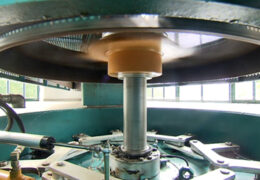
For more than 5000 years, humankind has harnessed the power of water. Today, too, hydraulic power is the most important renewable energy source in the world. And yet the potential for large hydroelectric power plants and hydro dams appears exhausted. However, a somewhat different concept is starting to emerge: small-scale hydroelectric plants.
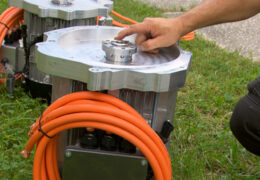
Who will mass-produce the first electric car that is practical for everyday use? Because whosoever is the first to enter this market of the future will rule it for years to come.