ANIMALS DECODED – RUMBLE IN THE JUNGLE
The natural world’s a noisy place, but how and why animals make themselves heard is a complex field that scientists are only beginning to decode.

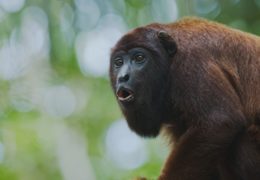
The natural world’s a noisy place, but how and why animals make themselves heard is a complex field that scientists are only beginning to decode.
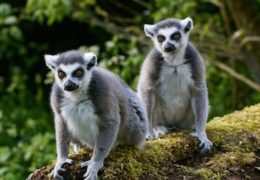
We think of communication being loud and obvious; body language and vocalisations – animals doing everything they can to be seen and heard – but there is a whole other world of signals that is invisible to us. Animals use colours that we can’t see, and scents too subtle for us to even notice, and yet for their own kind, these cues speak volumes.
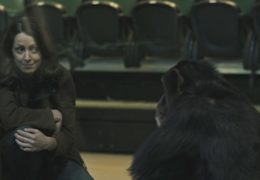
Deep in every jungle and desert, on the mountains and plains, animals are in constant conversation with each other – but they’re not using words. Whether their gestures are obvious even to humans, or buried deep within a blizzard of other movements, almost every creature on the planet uses body language to send signals and messages.
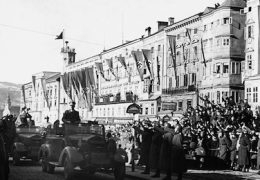
Linz in Austria was supposed to become a model of “Aryan” culture, the perfect National Socialist city. Hitler spent nine years of his childhood in Linz. He planned to transform the provincial town into a cultural capital with the “Führermuseum” at its centre. A study of the object of Hitler’s visions and fantasies.
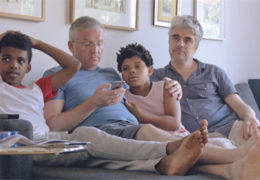
Being a mother is the most natural thing in the world. Or so it’s said. On her quest to find out what motherhood means to herself, director Antonia Hungerland encounters all kinds of people, none of whom seem to correspond to our traditional notion of a ‘real mother’. But what does it mean to be a ‘real mother’? A personal and poetic documentary.
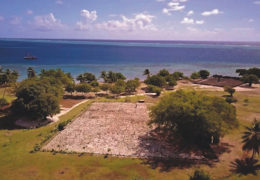
Of Polynesia’s once sacred sites, the stone temples, or marae, all that is left today are ruins, often buried under layers of vegetation and long since forgotten. The marae Taputapuatea in French Polynesia was recently declared a UNESCO World Heritage Site. We explore the secrets of the marae and their significance for Polynesian culture.
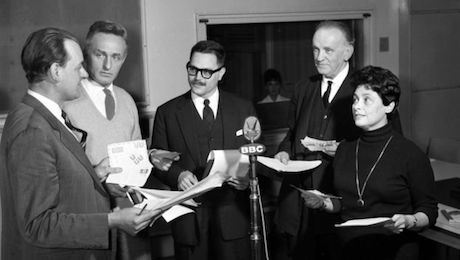
Until 1975, in the weekly radio programme “Letters without Signature”, the BBC read out letters written anonymously by GDR citizens. They were complaints about the economy, censorship, the socialist state. For the BBC, this was an act of freedom of expression, for the Stasi treason. The writers were mercilessly persecuted and some severely punished.
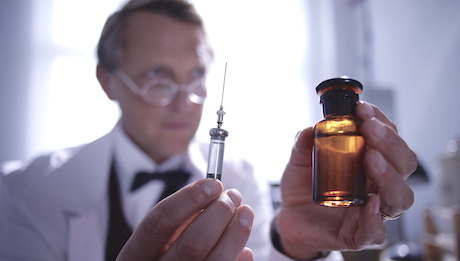
Once celebrated as a life saver, penicillin today is alarming researchers all over the world: over 70% of aggressive germs are now resistant to the alleged wonder drug. A development its inventor Alexander Fleming had foreseen. A fascinating film about the history and current state of antibiotics.
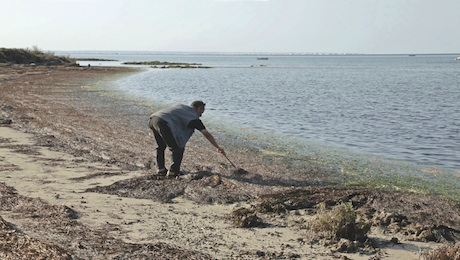
How does it feel to see a dead body floating in the sea like a strange fish? In Zarzis, a Tunisian fishing village on the border of war-torn Libya, fishing has become a source of fear. Every time the fishermen go out to sea, they fear encountering migrant boats in distress. We meet three of them who have involuntarily become rescuers at sea.
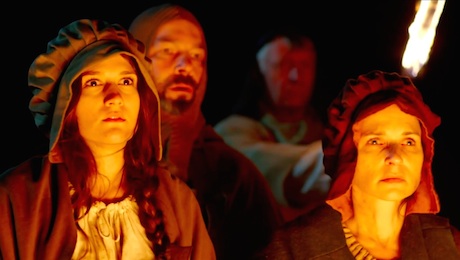
Between the end of the Middle Ages and the late 18th century, over 50,000 Europeans were persecuted, tortured and executed on charges of witchcraft. The pogrom was triggered by the book “Malleus Maleficarum”, published in 1486. Its detailed instructions for persecuting and annihilating alleged witches triggered a mass hysteria.
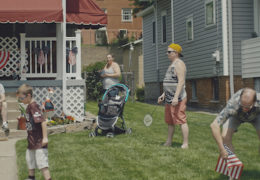
In their voice-overs, five young Afghanistan war veterans from Pittsburgh first establish familiar foundations: The trauma of 9/11, the ideology of violent retribution, military service as a patriotic family tradition, the “unfairness” of today’s warfare. They are slow to show us their faces. Physically unharmed but full of inner pain they have become the misunderstood upon their return.
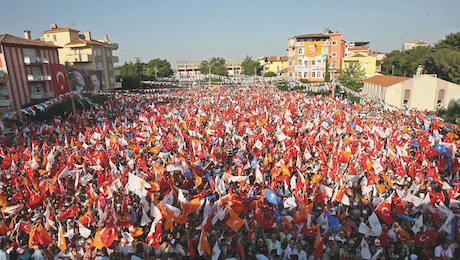
Since the failed coup in 2016, Turkey has changed at an unprecedented pace. Under Erdogan’s leadership, the AKP has transformed the country more radically than any other party before. An investigative documentary about the rise of the AKP and Erdogan’s vision of a “new Turkey”.